
🏙️ Neighborhood Guide: Where to Explore
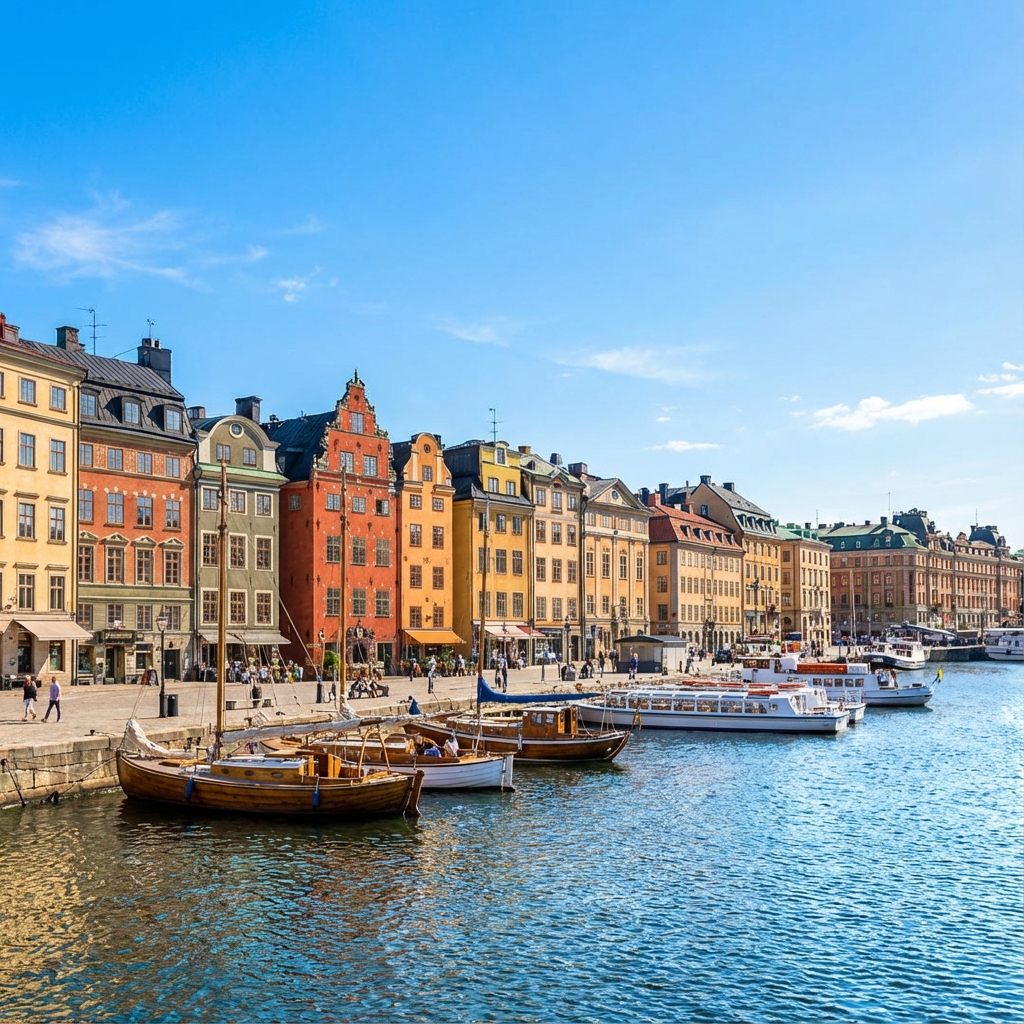
Stockholm is a city of distinct characters. To truly know it, you must cross the bridges between its main hubs:
- Gamla Stan: The medieval heart. Narrow alleys, the Royal Palace, and hidden cellar bars. Avoid the main tourist street (Västerlånggatan) and explore the quiet side streets like Prästgatan for a 17th-century atmosphere. Don’t miss the Nobel Museum and the tiny Stortorget square where the Stockholm Bloodbath occurred in 1520.
- Södermalm: Once working-class, now the epicenter of ‘cool’. Visit Hornstull for weekend markets, explore SoFo (South of Folkungagatan) for vintage shopping and the city’s best artisan coffee at roasteries like Drop Coffee. The Monteliusvägen viewpoint offers stunning skyline views, and the Katarina Elevator connects you to the old industrial docks.
- Östermalm: The elegant face of Stockholm. Home to the stunning 1880s food hall Östermalms Saluhall with its glass dome and marble counters. Stroll through Humlegården park, visit luxury boutiques on Biblioteksgatan, and experience traditional Swedish fika at cafés like Vurma or Sturekatten.
- Vasastan: A residential gem with wide boulevards and the ‘Antique District’. Perfect for finding local bistros and the iconic Stockholm Public Library with its futuristic architecture. The area has the best concentration of vintage shops and design stores in the city.
- Norrmalm: The commercial center with department stores like NK and Åhléns, plus the bustling Sergels Torg. The area has transformed dramatically with modern architecture, but don’t miss the historic aspects like the Royal Opera House and the Parliament Building.
🏰 Top Attractions for 2026
- The Vasa Museum (Vasamuseet): Still the world’s most visited maritime museum. See the beautifully preserved 1628 warship that sank on its maiden voyage. The museum has expanded its interactive exhibits and now includes virtual reality experiences showing how the ship was built and sailed. - Pro Tip: Go early morning (opens at 10 AM) or after 4 PM to avoid the cruise ship crowds. The museum shop has excellent souvenirs including replica ship models. - Timing: Plan for 2-3 hours. Audio guides in 12 languages available.
- ABBA The Museum: An interactive journey through the life of world’s most famous pop group. Walk through recreated scenes from Mamma Mia, try on costumes, and even record your own ABBA song. The museum has been updated with new interactive elements and a rooftop terrace with city views.
- Fotografiska: One of the world’s largest contemporary photography museums, located in an old industrial building on the water. Its restaurant is a leader in sustainable fine dining, and the museum hosts rotating exhibitions from world-renowned photographers. The building itself is a architectural gem with its location on the water.
- Skansen Open-Air Museum: The world’s oldest open-air museum, showcasing traditional Swedish life with historic buildings, animals, and craftspeople. Experience Sweden’s cultural heritage through living history exhibits. The museum is particularly beautiful in autumn when the trees change color.
- Royal Palace (Kungliga Slottet): One of Europe’s largest palaces still used for official ceremonies. The changing of the guard ceremony is a spectacular display of pageantry. The palace has over 600 rooms, though only a fraction are open to the public. The surrounding area of Gamla Stan is equally fascinating with its medieval architecture.
🌊 The Archipelago: A Summer Mandatory
With over 30,000 islands, the Stockholm Archipelago (Skärgården) is the city’s greatest asset and a UNESCO Biosphere Reserve. Take a day trip to Fjäderholmarna (only 20 mins by Waxholmsbolaget ferry) for swimming and crayfish fishing, or head further out to Sandhamn for white sand beaches and rugged pine forests. In 2026, electric ferries have expanded their reach, making island hopping greener than ever.
Best Islands to Visit:
- Fjäderholmarna: Closest and most accessible. Great for swimming, has restaurants and even a small brewery.
- Möja: Picturesque with forests, lakes, and traditional red cottages. Rent bikes to explore.
- Sandhamn: Most exclusive with beautiful beaches and the Royal Swedish Yacht Club.
- Grinda: Eco-friendly with no cars, perfect for hiking and nature.
- Nåttarö: Less touristy with stunning granite cliffs and sea views.
🍽️ Culinary Scene: Fika & Beyond
You haven’t been to Stockholm until you’ve had a Fika. It’s more than a coffee break; it’s a social institution that happens several times a day.
- Traditional Fika Spots: Visit Vete-Katten for a traditional experience with their famous cinnamon buns, or Sturekatten for modern takes on Swedish classics. Drop Coffee in Södermalm roasts their own beans and has multiple locations.
- Modern Nordic Cuisine: Restaurants like Ekstedt (cooking only over open fire in a glass-enclosed kitchen) or Frantzén (3 Michelin stars, often ranked among world’s best) showcase the height of Swedish culinary expertise. Pelikan has been serving traditional Swedish cuisine since 1875.
- Street Food & Markets: Östermalms Saluhall is the grand food hall with everything from fresh seafood to artisanal cheeses. For street food, try the Vietnamese-Cambodian fusion at Blue Dragon or modern Swedish twists at food trucks around Slussen.
- New Nordic Movement: Sweden is at the forefront of sustainable cuisine. Try restaurants like Kronhusboden for fresh seafood or Meatballs for the People for creative takes on the national dish.
🎨 Design & Shopping
Stockholm is a design capital with world-renowned brands and concepts:
- Design Shops: Visit Design House Stockholm for contemporary Scandinavian design, or Nordiska Galleriet for traditional crafts. NK department store has amazing design floors.
- Vintage & Second Hand: Södermalm is paradise for vintage hunters with shops like Myrorna (one of Europe’s largest vintage stores) and countless small boutiques on streets like Åsögatan.
- Contemporary Art: Moderna Museet has an impressive collection including works by Dalí and Picasso. Bonniers Konsthall focuses on contemporary art with rotating exhibitions.
🚇 Practical Tips: Easy Living
- Payment: Stockholm is 99% cashless. You’ll need a contactless card or mobile pay (Swish app) even for the smallest purchases. ATMs are rare in the city center.
- Transport: The Stockholm Metro is the ‘world’s longest art gallery’. Don’t miss the cave-like stations at T-Centralen and Stadion. SL Access card covers all public transport including the archipelago ferries.
- Sustainability: Tap water is among the cleanest in the world. Bring a reusable bottle! The city has extensive recycling programs and electric vehicle infrastructure.
- Weather: Summers (June-August) are mild and beautiful, but it rains frequently. Winters are cold but manageable with proper clothing. Pack layers!
- Language: Most people speak excellent English, but learning basic Swedish phrases like “Hej” (hi), “Tack” (thank you), and “Ursäkta” (excuse me) is appreciated.
- Safety: Stockholm is very safe, but be aware of pickpockets in tourist areas. The city has a low crime rate compared to other European capitals.
🗓️ Best Time to Visit
- Summer (June-August): Long daylight hours (up to 18 hours), mild temperatures (15-22°C), and archipelago season. Perfect for outdoor activities and festivals.
- Autumn (September-October): Beautiful fall colors, fewer crowds, and the start of the cultural season. Temperatures 5-15°C.
- Winter (December-February): Magical snow-covered city, Christmas markets, and northern lights viewing. Very cold (-5 to +5°C) but the city sparkles.
- Spring (April-May): Cherry blossoms, melting snow, and the return of outdoor terraces. Mild temperatures (5-15°C).
❓ FAQ: Visiting Stockholm
Is Stockholm expensive? Stockholm is moderately expensive but offers good value. Public transport and food can be pricey, but accommodation and activities are reasonable compared to other Scandinavian cities.
How many days do I need in Stockholm? A minimum of 3-4 days to see the main attractions and experience the archipelago. 5-7 days allows for day trips and a more relaxed pace.
Can I visit the archipelago in winter? Some islands are accessible year-round by ferry, but most archipelago activities are seasonal (May-October). Winter visits offer a different kind of beauty with frozen landscapes.
Do I need to speak Swedish? No, English is widely spoken everywhere. However, learning basic phrases shows respect and can enhance your experience with locals.
Is Stockholm safe for tourists? Yes, Stockholm is very safe. It’s consistently ranked among Europe’s safest cities. Standard precautions apply in tourist areas.