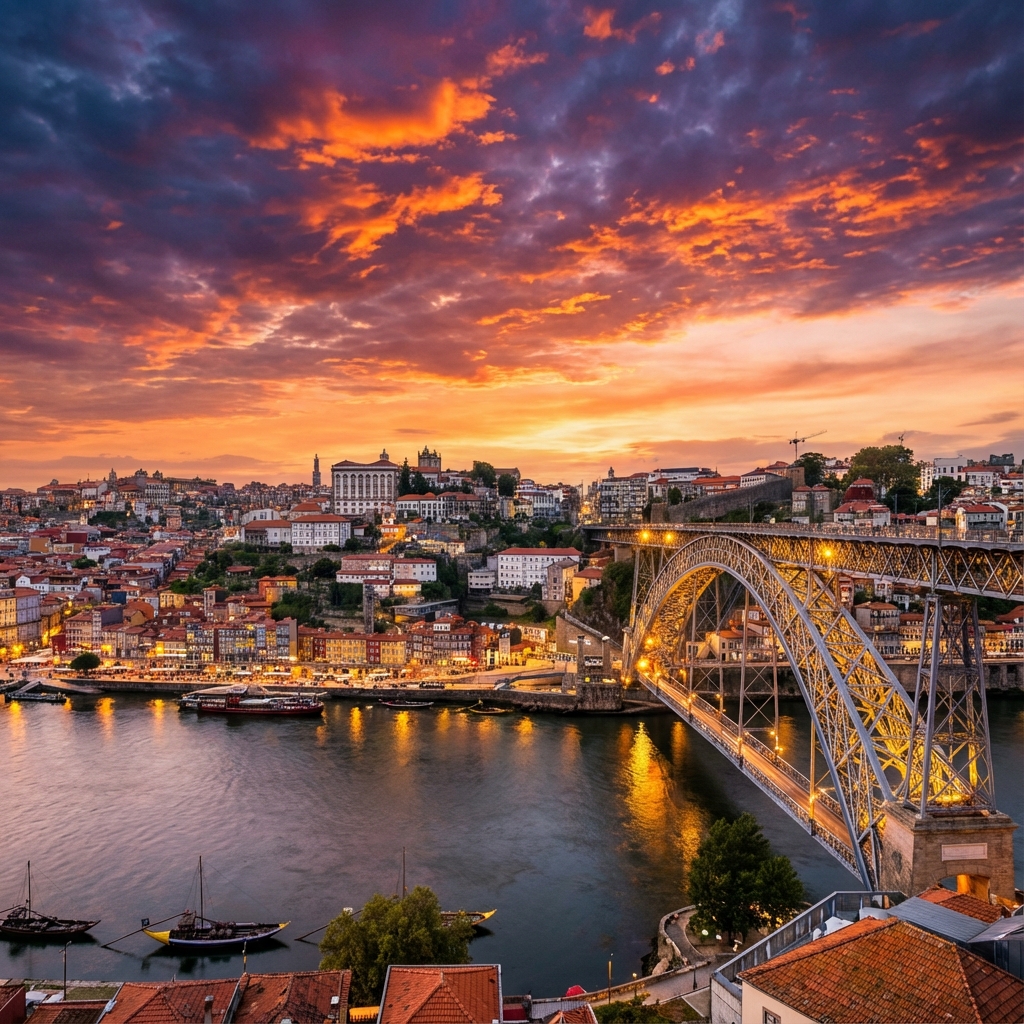

🍷 The Douro & The Wine Caves
No visit to Porto is complete without experiencing its relationship with the river and the wine:
- Vila Nova de Gaia: Located just across the river, this is where the historic Port wine cellars (caves) are found. Take a tour and tasting at famous houses like Graham’s, Taylor’s, or Sandeman.
- Dom Luís I Bridge: Walk across the upper deck of this iconic double-deck iron bridge for the most spectacular views of Porto and Gaia.
- Ribeira District: The riverside heart of Porto, a UNESCO World Heritage site known for its colorful facades and bustling atmosphere.
🏛️ Architecture & Tiles: Porto’s Visual Soul
Porto’s beauty lies in its intricate details and grand structures:
- São Bento Railway Station: Famous for its main hall covered in over 20,000 blue and white ‘azulejo’ tiles depicting Portuguese history.
- Clérigos Tower: Climb the 225 steps of this baroque tower for a 360-degree view of the city.
- Livraria Lello: Often cited as one of the most beautiful bookstores in the world, its neo-gothic interiors are said to have inspired J.K. Rowling.
🌊 Foz do Douro: Where the River Meets the Sea
For a change of pace, take the historic tram #1 to the coastal district of Foz:
- Perpétuas: Walk along the Atlantic promenade, see the Felgueiras Lighthouse, and enjoy the refreshing sea breeze.
- Beachside Dining: Foz is home to some of the best high-end restaurants and relaxed beach bars in the city.
🎒 Practical Tips for 2026
- The Hills: Porto is very steep. Wear comfortable shoes! If you need a break, the Funicular brought up to the Batalha district is both a practical tool and a scenic ride.
- Francesinha: This is Porto’s signature sandwich—layers of meat, covered in melted cheese and a hot tomato-beer sauce. It’s heavy, so share one if you’re not starving!
- Bridges Cruise: The ‘Six Bridges’ boat tour is a relaxing way to see the city from the water and understand the engineering that connects the two banks.
🏘️ Porto’s Neighborhoods
Beyond the famous Ribeira, Porto’s neighborhoods each tell a different story about the city’s evolving identity:
- Bonfim: Once a working-class district, Bonfim has become Porto’s creative hotspot. Independent studios, specialty coffee shops, and vintage stores line its sun-drenched streets, which see far fewer tourists than the historic center.
- Cedofeita: Porto’s most bohemian neighborhood, home to the Rua Miguel Bombarda gallery strip — a concentration of contemporary art galleries, design shops, and lively bars. Saturday afternoon here has a uniquely relaxed, creative energy.
- Baixa: The lower city district connecting the hilltop neighborhoods to the riverside. Don’t miss the São Bento train station’s extraordinary azulejo-tiled entrance hall, and the nearby Rua de Santa Catarina for shopping.
- Matosinhos: A coastal neighborhood just north of Porto, famous throughout Portugal for the freshest seafood in the country. The Sunday market and the beach make it worth a half-day trip on the metro.
🎭 Porto’s Cultural Scene
Porto has made enormous investments in culture over the past decade, resulting in a world-class scene that far exceeds what you’d expect from a city of its size:
- Casa da Música: Rem Koolhaas’s striking white concert hall is one of Europe’s architectural masterpieces and the home of Porto’s Philharmonic Orchestra. Guided tours of the building are available, or attend an affordable concert for the full experience.
- Serralves Foundation: An outstanding contemporary art museum set within 18 hectares of Art Deco gardens. The grounds alone are worth the entrance fee, and the museum’s collection showcases some of Europe’s best contemporary artists.
- Porto’s Fado Scene: While Lisbon is more famous for fado, Porto has its own distinctive style called Fado do Porto. Catch a live performance at one of the traditional tascas in the Ribeira or Cedofeita neighborhoods.
🌊 Day Trips from Porto
Porto’s position in northern Portugal makes it an excellent gateway to some of the country’s most beautiful landscapes:
- Douro Valley: Take the scenic train along the Douro River through terraced vineyards to Régua or Pinhão. Wine tastings at quintas (wine estates) perched above the river are an unforgettable experience. The journey itself, clinging to the cliff above the river, is worth the trip alone.
- Guimarães: The birthplace of Portugal, a UNESCO World Heritage city just 50 minutes by train. Its medieval center, hilltop castle, and charming central squares are extraordinarily well-preserved.
- Braga: Portugal’s religious capital and one of the oldest cities in the Iberian Peninsula, featuring the extraordinary Bom Jesus sanctuary and a young, university-driven energy in its streets.
- Viana do Castelo: A coastal city in the Minho region, famous for its traditional embroidery, fresh seafood, and the stunning view from the hilltop Santa Luzia basilica.
🎒 Practical Tips for Porto 2026
- The Hills: Porto is very steep. Wear comfortable shoes! The Funicular dos Guindais connects the Ribeira to the upper Batalha district, and is both practical and scenic. The vintage trams (lines 1, 18, and 22) are equally charming alternatives.
- Francesinha: Porto’s signature sandwich — thick slabs of meat (ham, fresh sausage, steak) covered in melted cheese and a hot, spiced tomato-beer sauce, usually served with chips. Heavy and indulgent, it’s best enjoyed for lunch. Café Santiago and Bufete Fase are legendary spots.
- Bridges Cruise: The Six Bridges boat tour (around €15) is a relaxing 50-minute way to see Porto and Vila Nova de Gaia from the water and appreciate the remarkable engineering of its six river crossings.
- Metro System: Porto’s metro is excellent and connects the airport, city center, and coastal districts including Matosinhos and the beach at Foz do Douro. A day pass offers great value.
- Best Time to Visit: May-June and September-October offer the best balance of good weather, smaller crowds, and lower accommodation prices. July and August are the busiest and most expensive months.
❓ FAQ: Visiting Porto
Is Porto crowded? Like many European gems, the main spots can get busy. Visiting in the shoulder seasons (May-June or September-October) offers a far more relaxed experience, with the Ribeira district and wine caves much more accessible without summer queues.
Should I visit Porto or Lisbon? Both if possible! But if you only have time for one, Porto is frequently praised for its more authentic feel, smaller and more manageable scale, extraordinary wine culture, and arguably more dramatic scenery. Lisbon has the edge for nightlife and variety of museums.
How do I get to Porto? Porto’s Francisco Sá Carneiro Airport (OPO) is well-connected to cities across Europe, with frequent budget airline routes. The airport metro line connects directly to the city center in around 30 minutes.