
♨️ The Spa Capital: Thermal Baths
Budapest sits on a network of thermal springs, making spa culture an essential part of daily life:
- Széchenyi Thermal Bath: The largest medicinal bath in Europe, located in City Park. Its yellow neo-baroque buildings and massive outdoor pools are iconic.
- Gellért Baths: Famous for its stunning Art Nouveau interior and mosaics. It’s like swimming in a cathedral.
- Rudas Baths: A traditional Ottoman-style hammam dating back to the 16th century, featuring a rooftop hot tub with a view of the river.
🏰 Buda vs. Pest: Exploring Both Sides
The two sides of the city offer completely different experiences:
- Buda Castle District: Walk the cobblestone streets to the Matthias Church and Fisherman’s Bastion. The fairytale towers offer the most famous panoramic view of the Parliament building across the river.
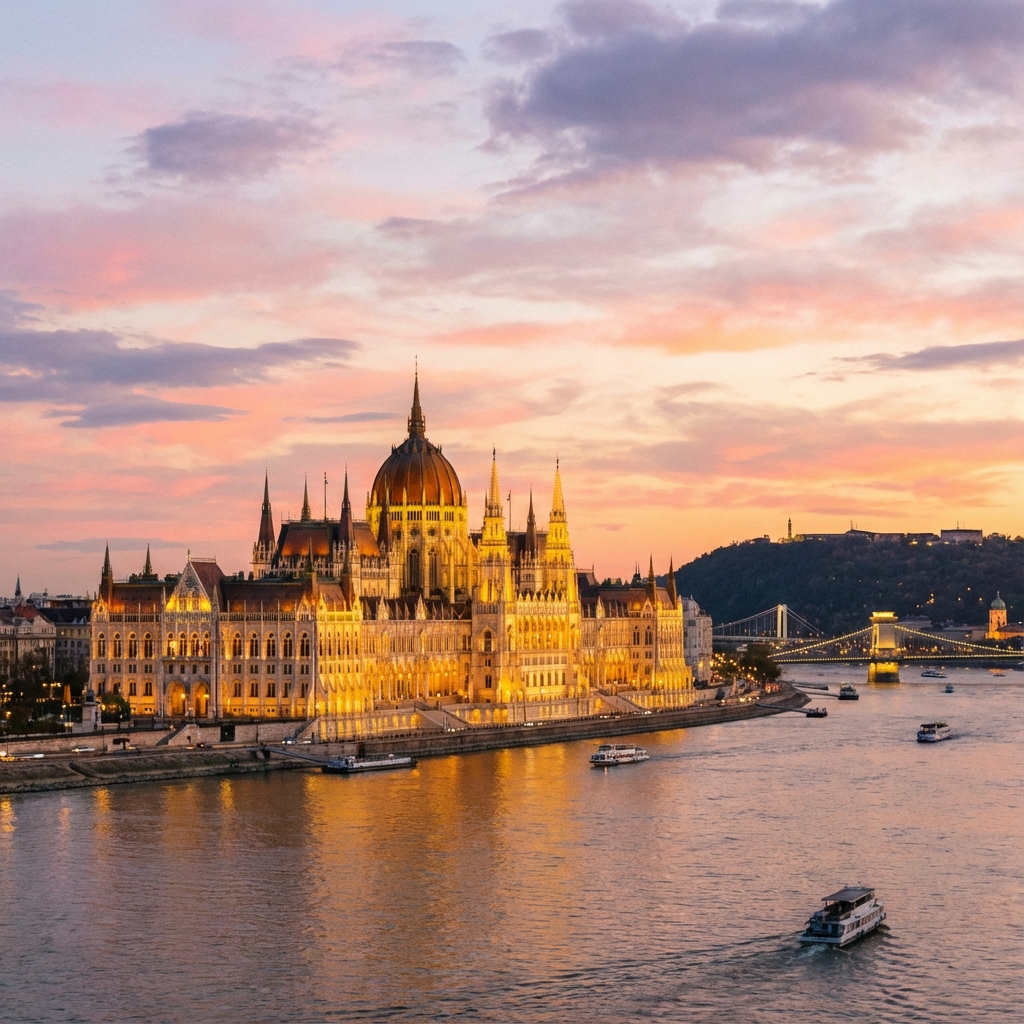
- The Parliament Building: One of the largest and most magnificent government buildings in the world. Booking a tour in advance is highly recommended.
- Andrássy Avenue: Often compared to the Champs-Élysées, this UNESCO-listed avenue leads from the city center to Heroes’ Square, lined with designer boutiques and grand townhouses.
🍹 Ruin Bars & Culinary Delights
Budapest’s nightlife and food scene are unlike anywhere else in the world:
- Ruin Bars: Unique bars built in the courtyards of abandoned buildings, furnished with vintage decor and street art. Szimpla Kert and Instant-Fogas are the most famous.
- Hungarian Gastronomy: Beyond Goulash, try Hortobágyi palacsinta (savory pancakes) and finishing with a Kürtőskalács (Chimney Cake) from a street stall.
- Great Market Hall (Nagyvásárcsarnok): The best place to buy authentic paprika, local sausages, and try home-style snacks on the upper floor.
🏘️ Budapest’s Best Neighborhoods
Budapest is a city of distinct districts, each with its own identity and appeal:
- Jewish Quarter (District VII): The historic heart of Budapest’s pre-war Jewish community, now its most dynamic neighborhood. The enormous Dohány Street Synagogue — the largest in Europe — anchors a district full of ruin bars, street art, independent restaurants, and the poignant Great Synagogue complex with its Holocaust memorial and museum.
- Palace Quarter (District VIII): Rapidly regenerating, this neighborhood is home to the Hungarian National Museum, the Erkel Theatre, and a growing number of creative bars, galleries, and start-up offices filling the ornate 19th-century buildings.
- Óbuda (District III): The oldest part of Budapest, built over the ruins of the Roman city of Aquincum. Quieter and more residential, it offers excellent traditional Hungarian restaurants, the fascinating Aquincum Museum, and a pleasantly unhurried atmosphere.
- Budapest XIII (Újlipótváros): A charming residential district north of downtown with tree-lined streets, excellent local restaurants, and a strong community feel. Pozsonyi Street is famous for its concentration of Hungarian eateries beloved by locals.
🎭 Events & Cultural Highlights
Budapest’s cultural calendar is rich throughout the year, blending classical heritage with contemporary creativity:
- Budapest Festival Orchestra: One of the world’s top orchestras performs regularly at the Müpa Budapest concert hall. Tickets are surprisingly affordable compared to similar orchestras in Western Europe.
- Sziget Festival (August): One of Europe’s largest and most celebrated music festivals, held on a Danube island just north of the city center. Five days of international headliners, art installations, and a remarkable community atmosphere draw visitors from across the globe.
- Budapest Wine Festival (September): Held in the grounds of Buda Castle, this prestigious event showcases Hungary’s finest wines from the legendary Tokaj region alongside food producers and live music.
- Budapest Christmas Market (December): Vörösmarty Square transforms into one of Central Europe’s most beautiful Christmas markets, with Hungarian craft vendors, hot kürtőskalács, and mulled wine beneath a luminous tree.
🌄 Day Trips from Budapest
Budapest’s central position in the Carpathian Basin makes it an excellent base for exploring the wider region:
- Szentendre: A charming artists’ town on the Danube Bend, 25 km north of Budapest, with a Serbian Orthodox heritage, excellent craft shops, and the outstanding Hungarian Open Air Museum. Reachable by suburban rail (HÉV) in 40 minutes.
- Esztergom & Visegrád: The Danube Bend towns of Esztergom (Hungary’s religious capital, with its enormous basilica) and Visegrád (with its medieval hilltop citadel) make a perfect combined day trip by boat or train.
- Tokaj Wine Region: Hungary’s most celebrated wine region, producing the legendary Tokaji Aszú dessert wine for over 500 years. About 3 hours by train from Budapest, the rolling volcanic hills and historic cellars make for a memorable overnight trip.
- Lake Balaton: Central Europe’s largest lake — the “Hungarian Sea” — is just 1.5 hours by train. Balaton’s southern shore is fun and lively; the northern shore has volcanic hills, wine estates, and picturesque villages.
🎒 Practical Tips for 2026
- Budapest Card: If you plan to visit many museums and use public transport frequently, the Budapest Card offers excellent value with unlimited transport and free or discounted museum entry.
- Currency: Hungary uses the Forint (HUF). Cards are widely accepted in most establishments, but keep small change for public restrooms (typically 100-200 HUF) and some traditional market stalls.
- Transport: The metro system — including M1, the oldest in continental Europe (1896) — combined with the iconic yellow trams, provides excellent city coverage. Tram #2 along the Pest riverbank offers one of the best urban tram journeys in Europe. Night buses replace the metro after midnight.
- Baths: Practical Advice: Popular baths like Széchenyi and Gellért can get crowded on weekend afternoons. Visit on weekday mornings for a more relaxed experience. Many people spend 2 to 3 hours soaking and alternating between pools of different temperatures.
- Best Time to Visit: April-May and September-October are ideal — pleasant weather, manageable crowds, and lower accommodation prices. August brings Sziget Festival and high summer energy. December is magical but cold.
❓ FAQ: Visiting Budapest
Is Budapest a cheap city? Budapest is generally more affordable than Western European capitals, especially for dining, spa entry, public transport, and accommodation. Prices in the main tourist areas have risen but remain good value overall — a full evening of dinner and drinks typically costs a fraction of what you’d pay in Vienna or Prague.
Should I stay on the Buda or Pest side? Pest is the heart of the action, close to ruin bars, restaurants, the Jewish Quarter, and shops. Buda is quieter, more residential, and romantic — better suited to those who want a tranquil base and don’t mind crossing the bridge. Most first-time visitors prefer Pest’s convenience, particularly around Districts V, VI, and VII.


